Lootbound Items
Understand footprints, auras, and damage identities so loot stops feeling random.
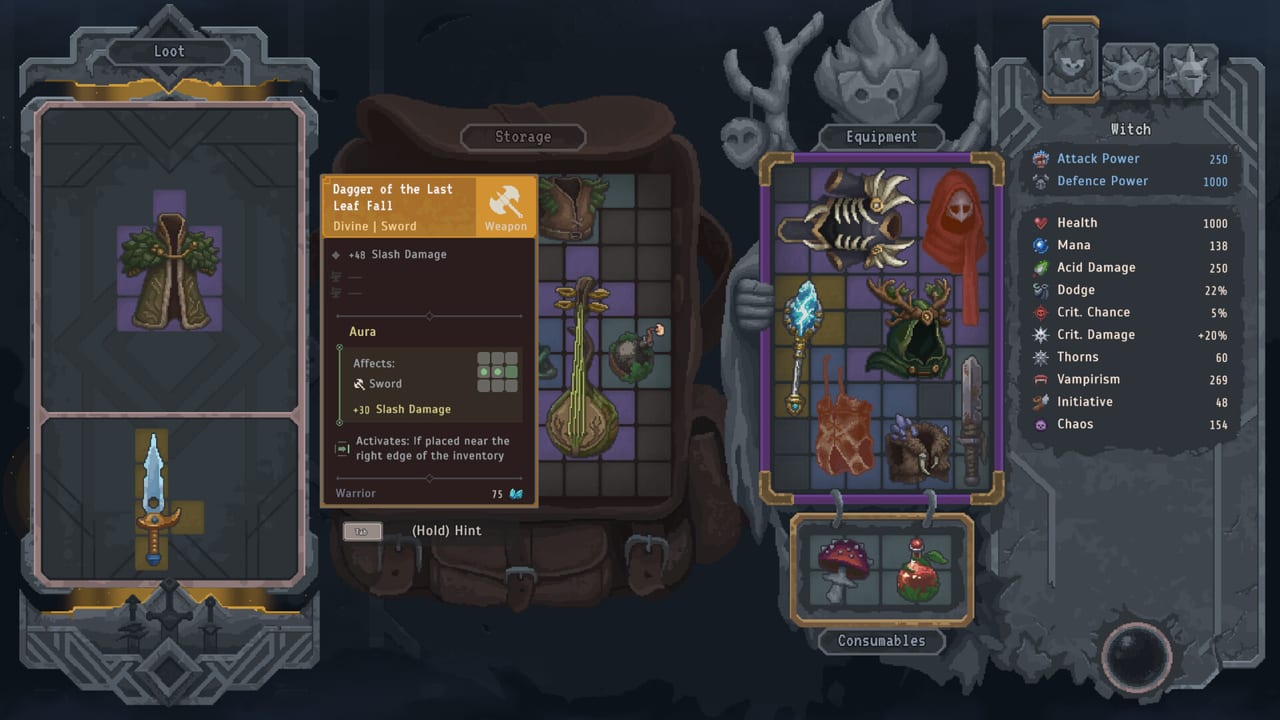
Items are the language of Lootbound
Every meaningful decision eventually becomes an item decision: what to pick up, how to rotate it, which aura it completes, which companion deserves it, and which damage type it adds to the party. This hub organizes those decisions.
Read in this order:
Then apply them inside Builds and Guides.
Why item pages matter before launch
The demo teaches the packing puzzle quickly. Players who bounce usually bounced off inventory friction, not combat animations. Learning item grammar early makes launch week smoother and makes wishlist expectations realistic (Demo and Release.
Tools that extend this hub
- Aura Planner for zoning
- Damage Cheat Sheet for matchup answers
- Build Path Advisor for lane commitment when loot tempts you sideways
Item evaluation checklist
Ask of every drop:
- What footprint cost does it demand after rotation?
- Which district does it join?
- Which damage identity does it reinforce?
- What am I removing to place it?
- Does a companion need it more than the hero?
Cross-links to classes and bosses
Class pages explain who wants which identities (Classes. Boss pages explain which identities you cannot skip (Bosses. Items are the bridge between those needs.
Extended practical checklist — Items Hub
For “Items Hub”, use this checklist at every biome gate and after every elite that nearly wiped you. First, name the lane in one sentence so you cannot hide behind vague ambition. Second, point at the keystone aura on each board and confirm it still activates after the latest pickup. Third, name the armor answer in the party—break, shred, bypass, or a documented mix—and identify which character seats it. Fourth, count remaining mana and health debt before you accept another high-risk branch. Fifth, decide which companion is carrying enable, which is carrying payoff, and which is carrying durability so loot stops being sprinkled by panic.
When a drop arrives, force a four-question filter before it touches the grid: what footprint remains after rotation, which district wants it, which item loses its seat, and whether the swap still serves the finale you are assembling. If you cannot answer those questions quickly, leave the item on the floor. Lootbound rewards decisive refusal more often than heroic packing. Rehearse refusals in the demo until they feel boring; boring discipline is how expeditions become repeatable.
Common failure stories and repairs
On “Items Hub” pages, failure story A is the museum board: every rarity represented, no district alive. Repair by deleting tourist items until two neighborhoods are obvious. Failure story B is the empty-pool fighter: flashy ability use on trash, silence on bosses. Repair by assigning autoattacks to easy rooms and saving spend for elites. Failure story C is the authored hard counter: boss parts chosen for spectacle while damage coverage was incomplete. Repair by treating part choice as matchmaking against your own seats. Failure story D is companion neglect: hero jewelry polished while allies wear junk. Repair by scripting at least one automatic action pattern that matters every fight.
Cross-link your repair to the right hub instead of rereading everything. Inventory confusion belongs with grid and aura pages. Pacing confusion belongs with route and dice pages. Finale confusion belongs with Guardian pages. Identity confusion belongs with builds and the advisor tool. The fastest improvement loop is narrow: one failure story, one hub, one tool rehearsal, one more run.
Launch-week and long-term maintenance
When revisiting “Items Hub” in the days around August 14, 2026, expect patches, balance notes, and community shorthand to move faster than any static guide. Use this wiki as a systems framework, then verify contested numbers and date-sensitive claims on Steam. Keep your personal notes short: lane, keystone, coverage, next purchase. Those four fields survive meta shifts better than a screenshot folder of random inventories. After each meaningful clear or wipe, update only the field that actually broke. That is how a fan wiki stays useful without pretending to be a patch blog.
Focus keyword for this page: Items Hub. Keep repairs tied to this topic instead of rereading the entire wiki after every wipe.
Frequently Asked Questions
Quick answers to the most common questions.
Are item slots class-restricted?
Some rewards can be class-leaning, but the core fantasy is flexible footprints rather than rigid WoW-style slots.
Should I always equip new loot?
No. Evaluate footprint and aura fit before displacing a working district.
Where do I learn aura rules?
Start with Auras Explained, then Aura Districts.
How do items relate to damage types?
Items are how you permanently speak a damage language across a run—see Damage Types.